Templates
Product management templates
From a customer problem to a shipped feature: write the requirements, prioritise with RICE, Kano or MoSCoW, map opportunities and assumptions, define the metrics and plan the launch.
83 free templates · Editable · Works with Claude and ChatGPT · Page 1 of 2
Product management templates 1–60 of 83
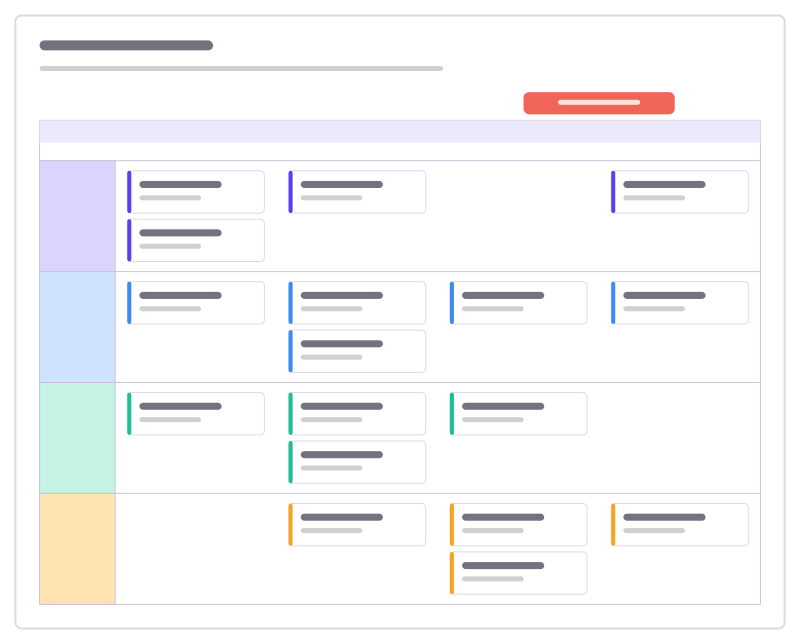
Release plan
Work per stream across four sprints as task cards in swimlanes, with the release marked.
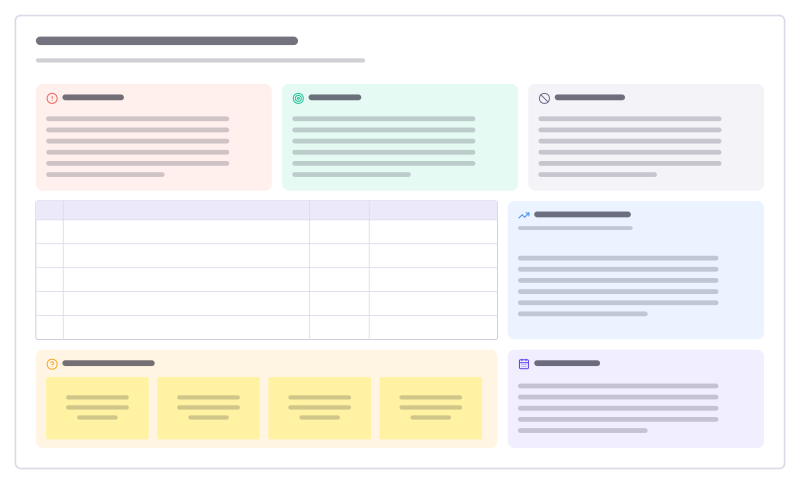
Product requirements (PRD)
A one-page spec: problem, goals and non-goals, prioritised requirements, metrics and open questions.
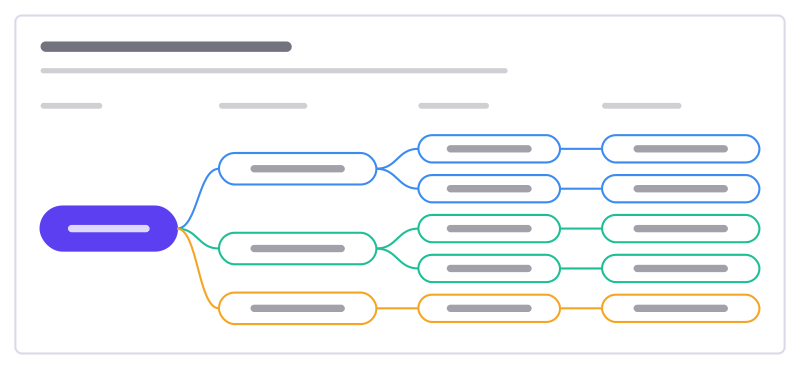
Opportunity solution tree
One outcome, the customer opportunities behind it, solutions for each and the experiments to test them.
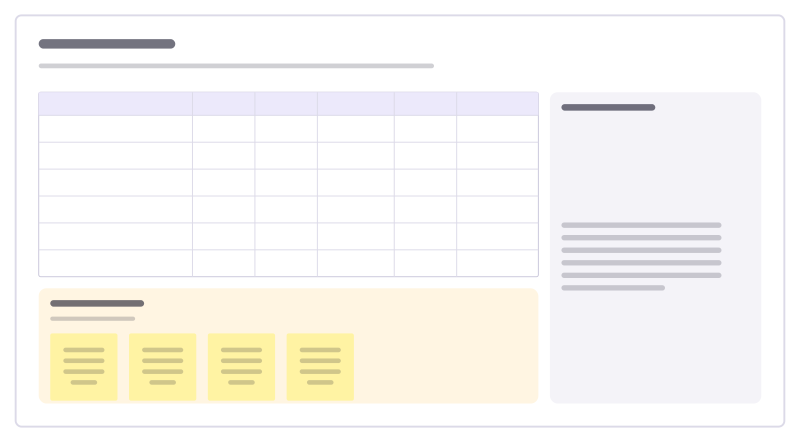
RICE scoring
Score ideas by reach, impact, confidence and effort, so the backlog order has reasons.
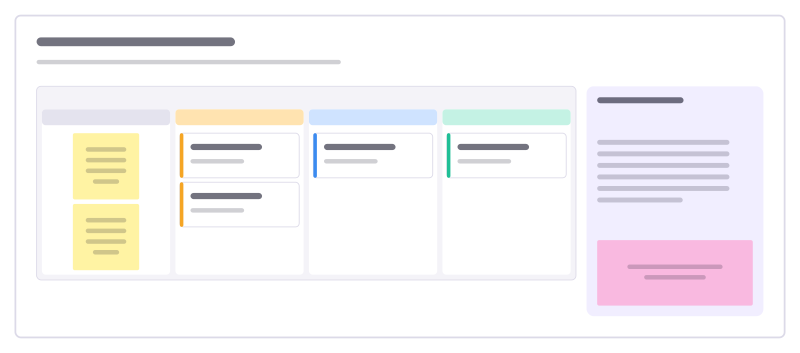
Customer feedback board
A kanban for feature requests and feedback: inbox, under review, planned and shipped.
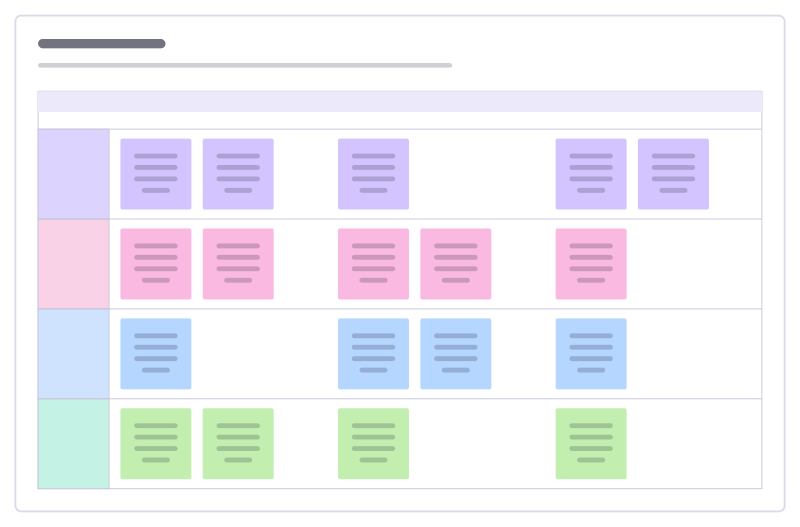
Launch plan
Who does what before, during and after a launch, in swimlanes per team.
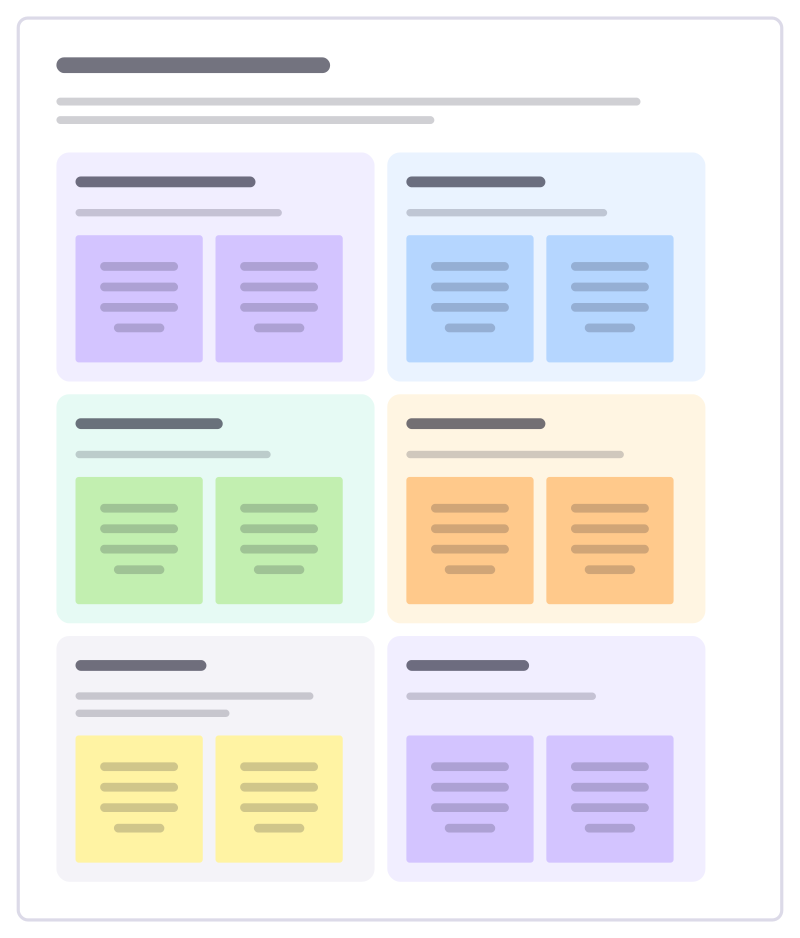
A/B test readout
Share the result of a finished A/B test: what changed, what happened to the main and guardrail metrics, and what you decide.
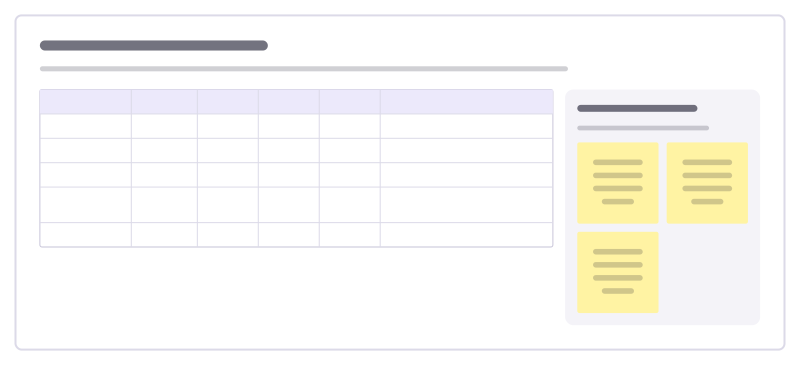
Cohort retention review
Read a cohort table together: how many customers from each sign-up month are still active later, and what explains the differences.
Analytics tracking plan
Decide which user actions a feature records before it is built: the event names, what each carries and the question it answers.
Problem statement builder
Write a problem worth solving before anyone suggests a solution: who has it, when, what it costs them and how we know.
Kano feature sort
Sort features by how customers react to having or missing them: basics they expect, features where more is better, and delighters.
MoSCoW prioritisation
Agree the scope of a release or project as must have, should have, could have and won’t have this time.
Feature request triage
Go through incoming feature requests: who asked, the problem behind the ask, how often it comes up and what we decide.
Opportunity scoring
Find under-served needs: score how important each outcome is to customers and how satisfied they are today, then chase the biggest gaps.
Product vision on a page
Say where the product is going in one page: the change it makes, for whom, what it will never be, and how we’ll know it worked.
Discovery sprint plan
Plan two to four weeks of discovery: frame the question, learn from customers, generate options, test them and decide.
Assumption test plan
For each risky assumption behind a plan: how we will test it, what we will measure, where the pass line is and what we found.
Product teardown
Study another product end to end as a team: first impressions, onboarding, the core loop, pricing, and what to borrow or avoid.
Feature sunset review
Decide whether to retire a feature: who still uses it, what it costs to keep, what replaces it and how to tell people.
Metric definitions
One agreed definition per product metric: what it counts, how it’s calculated, its target, owner and where the data comes from.
North star and input metrics
One metric that captures the value customers get, surrounded by the few input metrics teams can actually move.
Product principles
Write the few principles that settle product arguments before they start, each with an example of what it rules in and out.
Beta programme plan
Run a beta that teaches you something: who to invite, how to onboard them, how to listen, when to iterate and how it ends.
Pricing and packaging
Lay out your plans side by side: who each one is for, the price, what it includes, its limits and the reason to upgrade.
Feature adoption funnel
Follow a new feature from being noticed to becoming a habit, and find the stage where most people drop off.
Release notes draft
Collect what changed in a release and write it for customers: new, improved, fixed, and what’s coming next.
Customer problem ranking
Rank the problems customers bring up by how many have them, how much they hurt and how well we could solve them.
Assumption map
Sort what you believe about an idea by how much it matters and how much evidence you have, then test the risky ones first.
Metric tree
Break one top-level metric into the drivers that move it and the levers teams control, so every team sees its link to the goal.
Experiment plan
Design one experiment before running it: the belief, the test, the signal you expect and what you will do with each result.
Jobs to be done
Understand the progress customers are trying to make: the situation, the job, what they use today and what holds them back.
AI feature spec
Specify an AI-powered feature: the user and job, inputs and outputs, how it can fail, the guardrails and how you’ll measure quality.
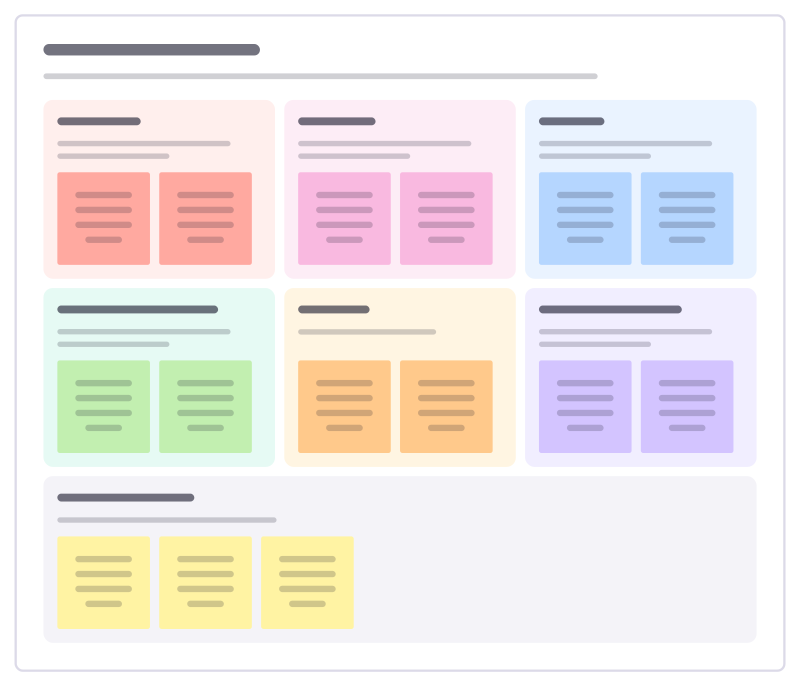
AI use case canvas
Think an AI idea through before building it: the problem, the people, the data, what good looks like, risks and who stays in the loop.
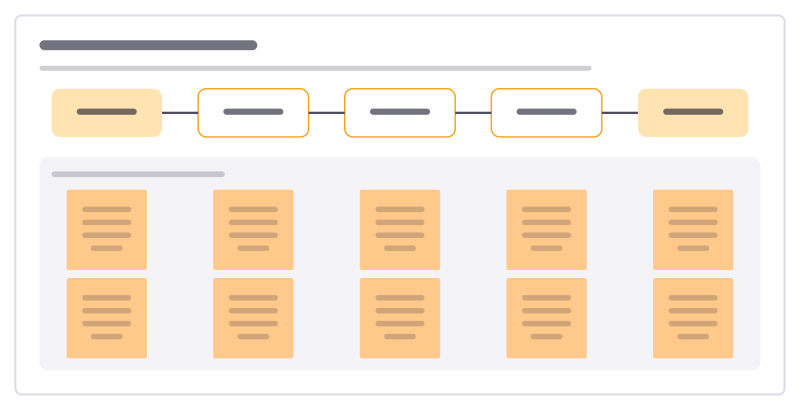
Domain events workshop
Map a business process as the events that happen in it, with the commands, people and rules around each one.
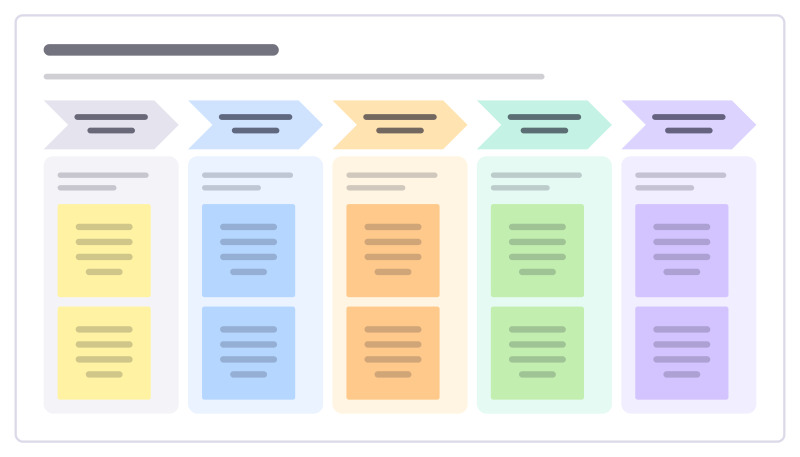
Feature flag rollout
Roll out a feature behind a flag in stages, with who sees it at each stage, what you watch and when you move on or back.
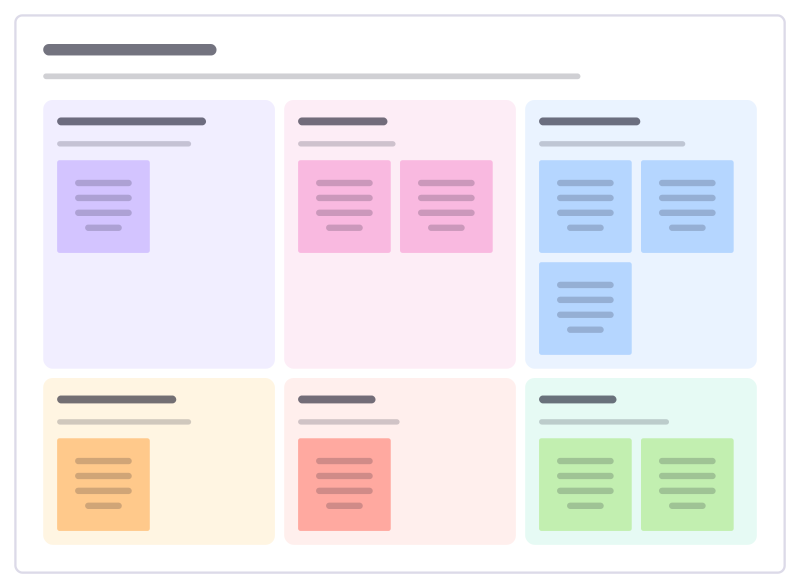
Bug bash plan
Organise an hour where everyone tries to break a feature before launch: scope, roles, test ideas, how to report and prizes.
SCAMPER prompts
Seven ways to twist an existing product or process into new ideas: swap, combine, adapt, resize, repurpose, remove, reverse.
Backlog refinement
Move backlog items from rough idea to ready-to-plan, and catch the ones that are too big or too vague before planning day.
Story splitting
Break a story that’s too big into smaller ones that each still deliver something, using a few reliable ways to split.
Rules and examples
Before building a story, agree its rules and a concrete example for each, and collect the questions nobody can answer yet.
Value proposition fit
Line up what customers are trying to get done, what gets in their way and what they wish for, against what you offer and how it helps.
Hypothesis tracker
Keep every working hypothesis in one table with the evidence for and against, how confident you are and the next test.
Customer advisory board
Plan a session with a small group of key customers: who to invite, what to ask them, what to share and how you will follow up.
Account adoption plan
See which teams in a customer use which parts of the product, find the gaps and plan how to get more of them using it well.
Voice of the customer programme
Bring what customers say in surveys, calls, tickets and reviews into one place, and decide who hears it and how often.
Dashboard requirements
Before building a dashboard, agree who it is for, the decisions it should help with, the numbers it needs and how fresh they must be.
Insight to action
Take a finding from data and walk it through to a decision: what you saw, why it matters, what it might mean and what you will do.
Weekly metrics review
Run a short weekly look at the numbers that matter: what moved, why you think it moved and whether anyone needs to act.
Metric drop investigation
Work out why a key number suddenly changed, step by step: is it real, where is it, when did it start and what caused it.
User flow
The screens and steps a person goes through to finish one task, with what each step must achieve and where it can go wrong.
Five-day design sprint
Go from a big question to a tested prototype in one week: understand, explore, choose, build and learn from real people.
Design brief
Frame a design project before anyone opens a design tool: the problem, people, constraints, what success means and what to deliver.
Bets portfolio
See your initiatives as a portfolio of bets, from safe improvements to bold new ones, and check the mix is deliberate.
Release readiness check
A go/no-go review before a release: what is ready, what is still open and what must be true before you ship.
Wireframe review
Review early wireframes on structure and flow before anyone discusses colours: is the content right, and can people find it?
Idea sorting wall
After a brainstorm, sort every idea by what it needs next, so the good ones don’t die on the board.
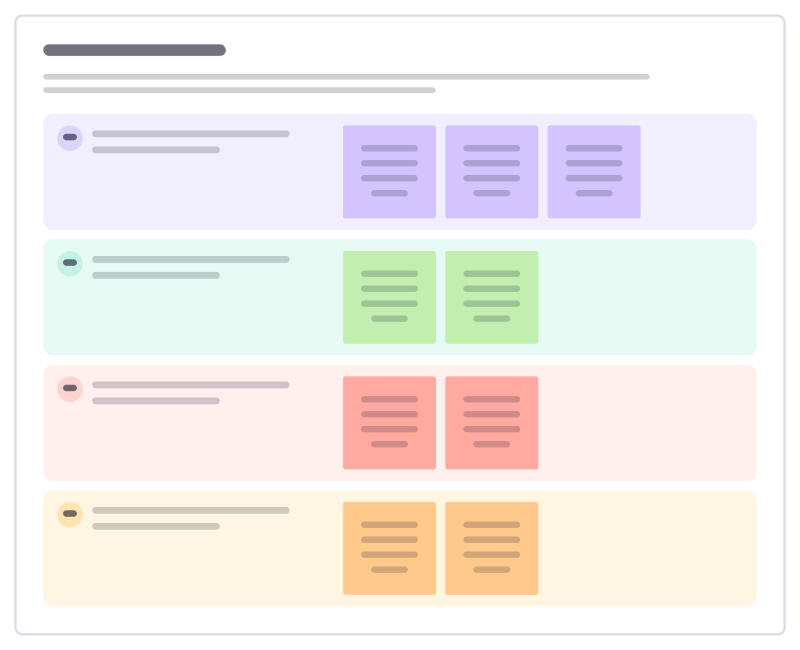
Borrowed ideas
Ask how other industries would solve your problem, then steal their best moves on purpose.
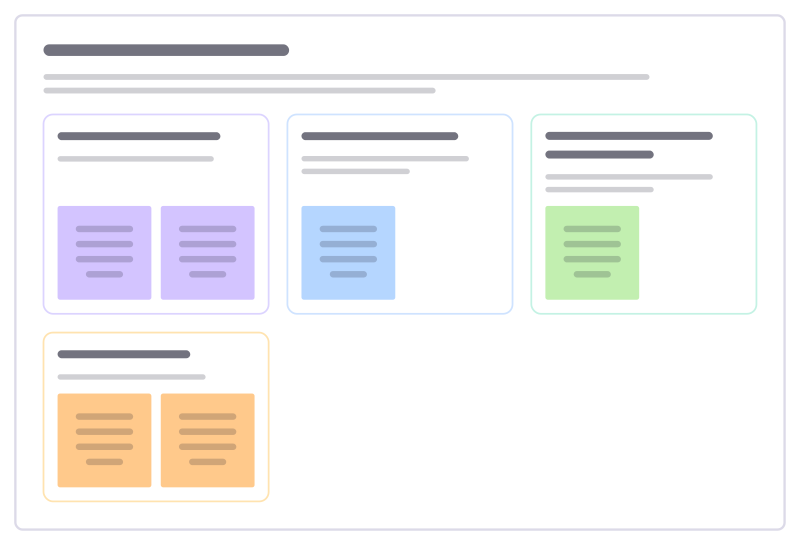
Inspiration share-out
Everyone brings examples from other products or places that solve a similar problem well, and the group captures what to borrow.
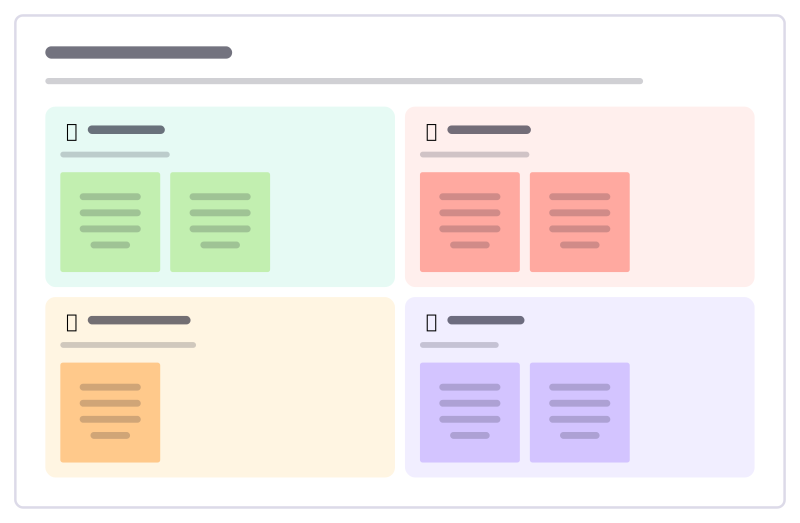
Feedback grid
Collect reactions to a demo, prototype or talk in four boxes: what people liked, what to change, open questions and new ideas.
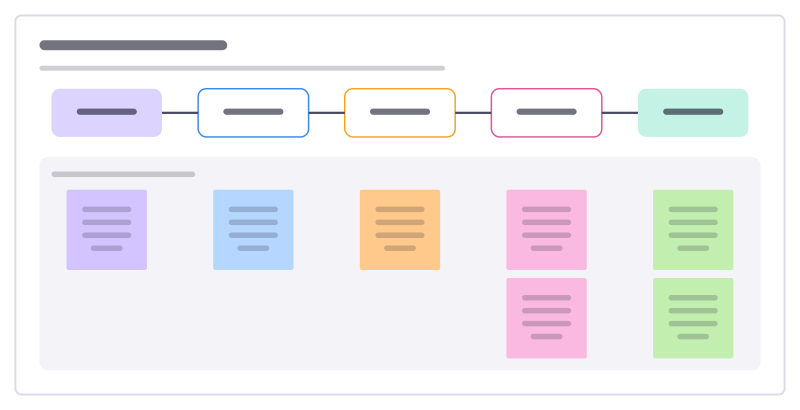
Idea to experiment
Turn one promising idea into a small, honest test: the belief behind it, the test, the signal to watch and the decision it informs.
Bring your team and your agents to one board
Free to use, open source, and yours to host. No credit card, no seat count.