Templates
Brainstorming templates
Get many ideas out fast, then narrow them down. Each board gives the group a prompt to write against, room to cluster what came up and a way to vote on what to try first.
42 free templates · Editable · Works with Claude and ChatGPT
All 42 brainstorming templates
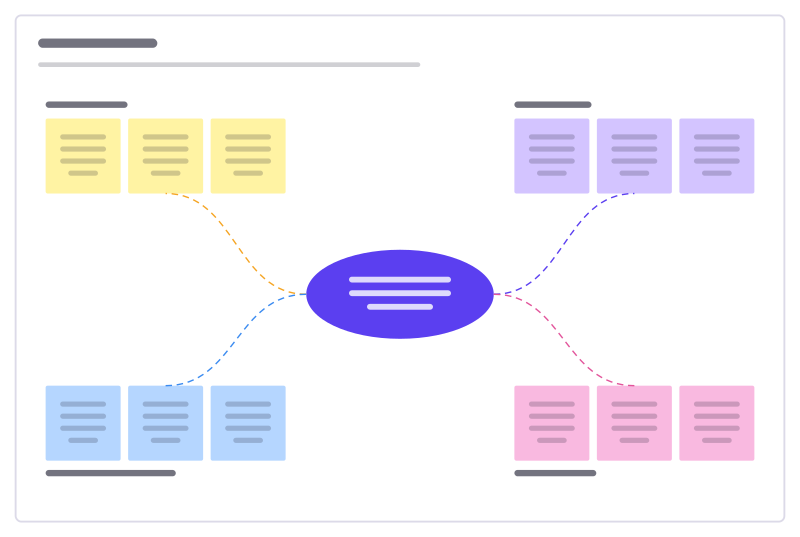
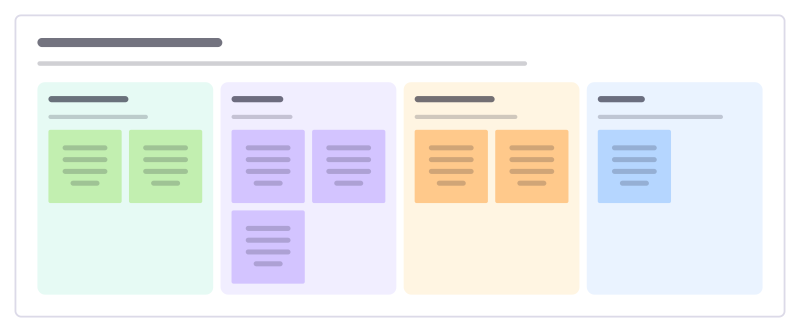
Idea burst
A central challenge with four idea clusters to fill, sort and vote on.
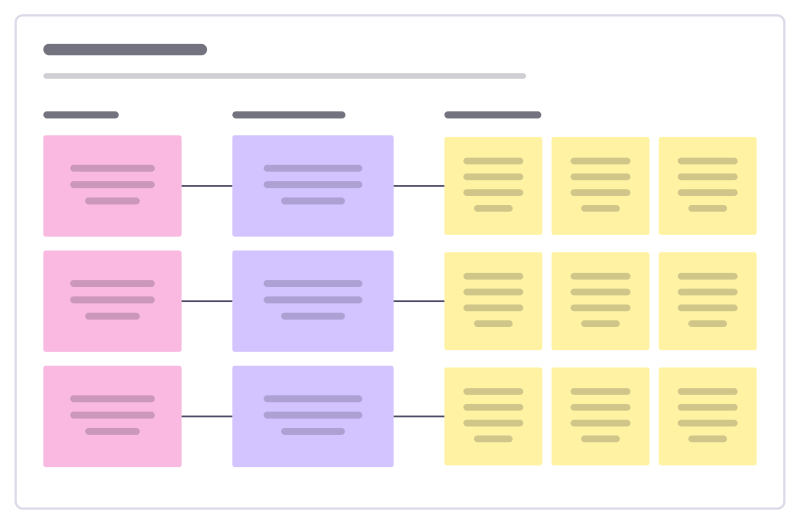
How might we
Turn research insights into “How might we…?” questions, then into first ideas.
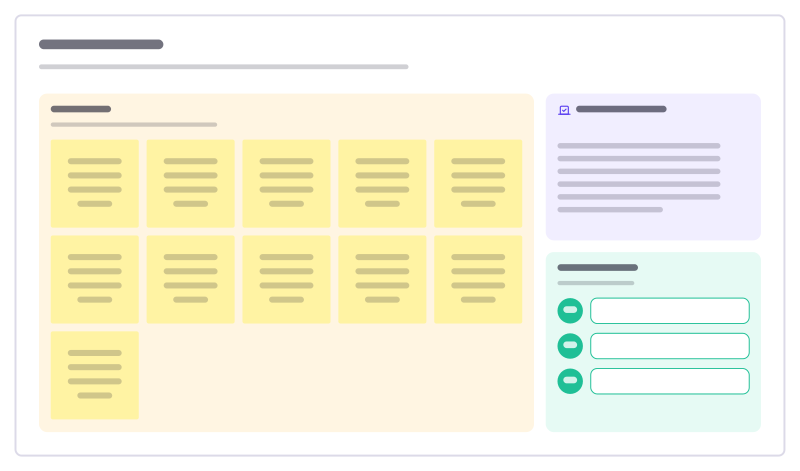
Dot voting
Collect ideas, vote with a fixed number of dots each, and move the winners to a shortlist.
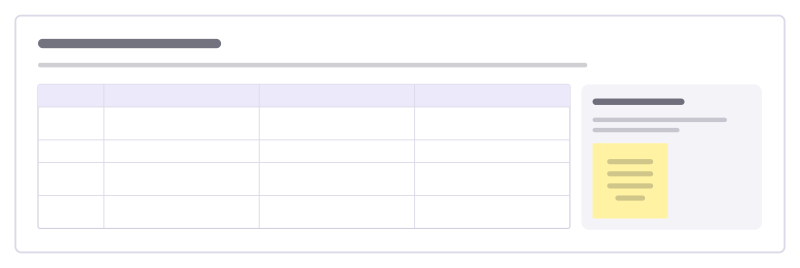
Brainwriting rounds
Generate ideas in writing instead of out loud: each person writes ideas, then builds on their neighbour’s, round after round.
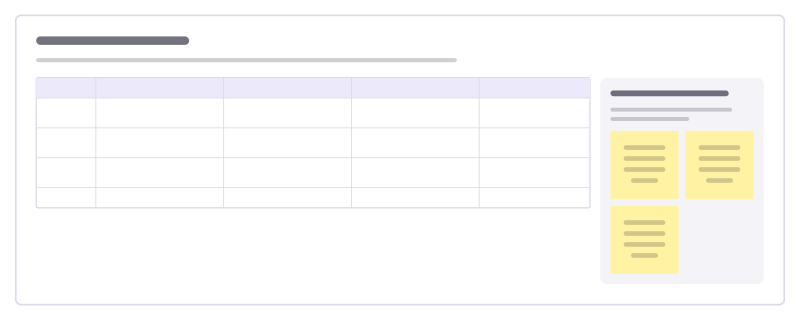
Round robin ideas
Each person starts an idea, then passes it on so the next person builds on it, until every idea has had several hands.
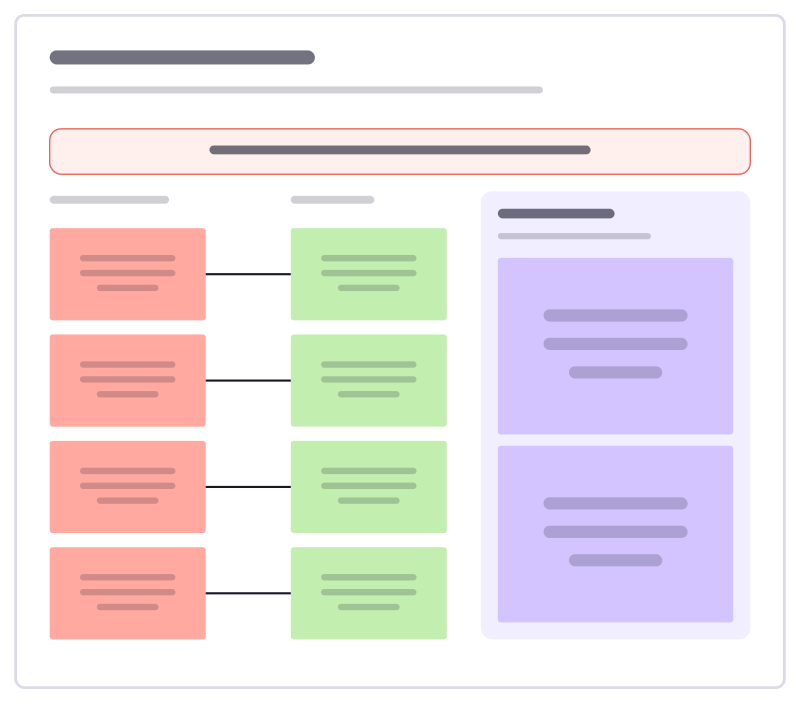
Reverse brainstorm
List ways to make a problem worse, then flip each one into an idea worth trying.
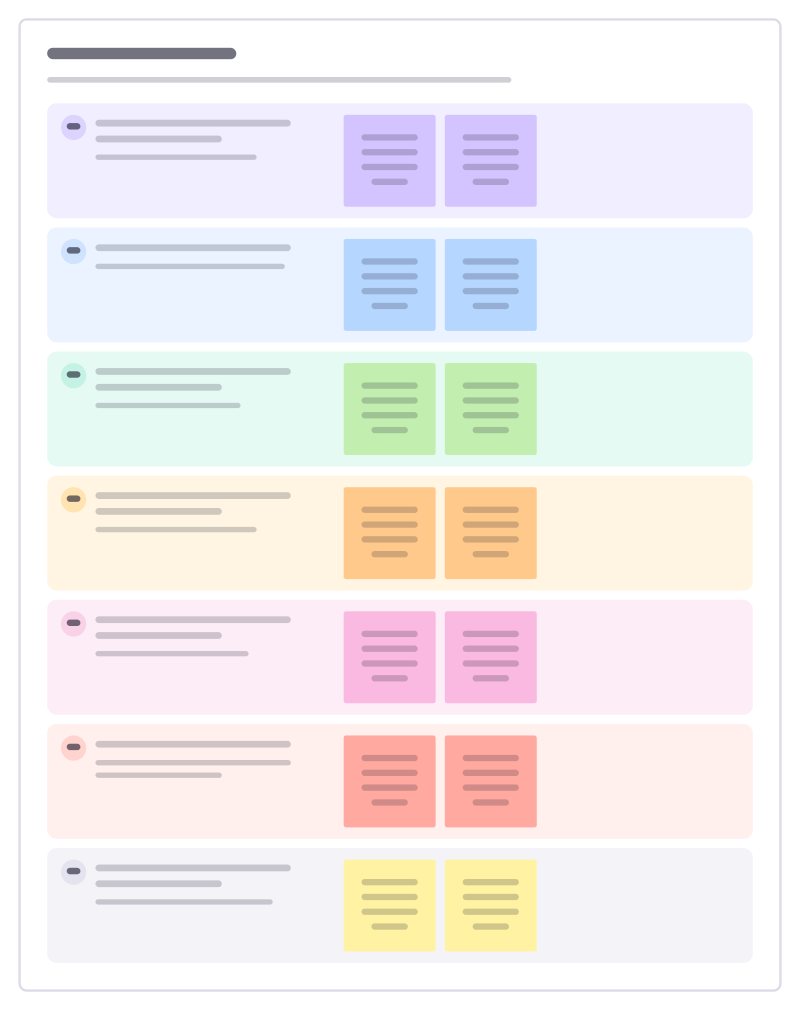
SCAMPER prompts
Seven ways to twist an existing product or process into new ideas: swap, combine, adapt, resize, repurpose, remove, reverse.
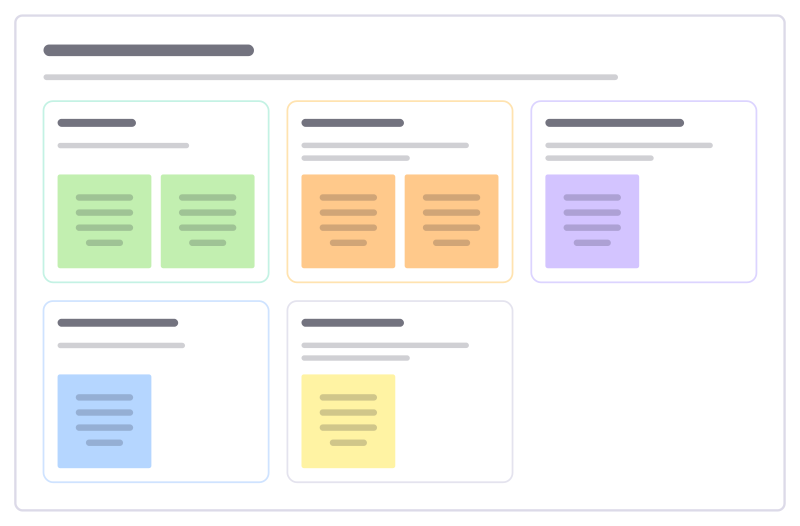
Idea sorting wall
After a brainstorm, sort every idea by what it needs next, so the good ones don’t die on the board.
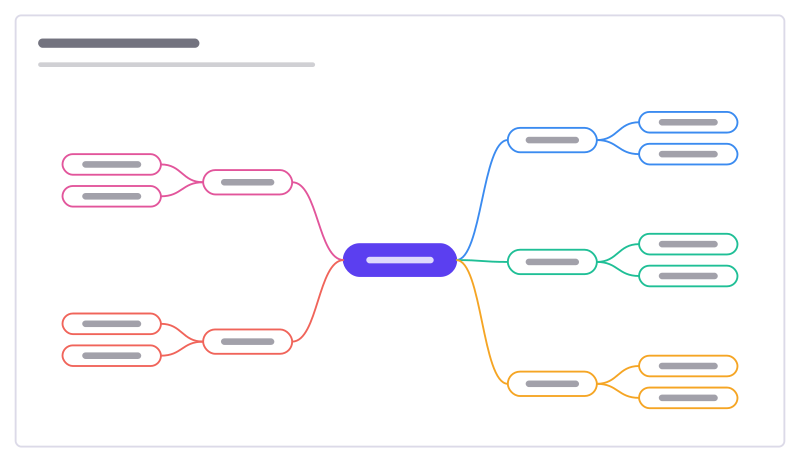
Mind map starter
A central topic with branches and sub-ideas, ready to grow in both directions.
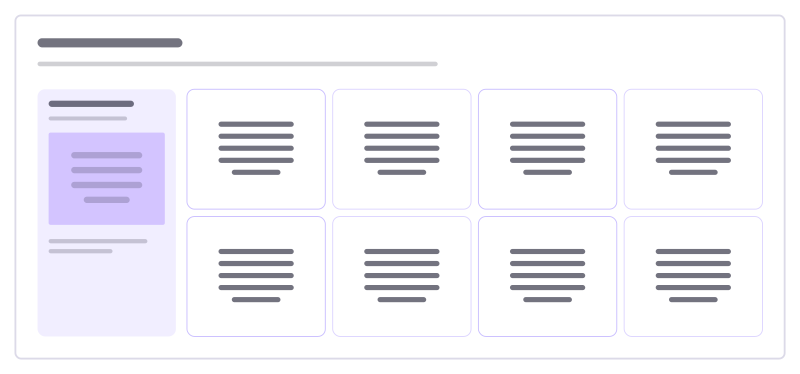
Eight sketches
Fold one problem into eight fast sketches, one minute each, then pick the strongest.
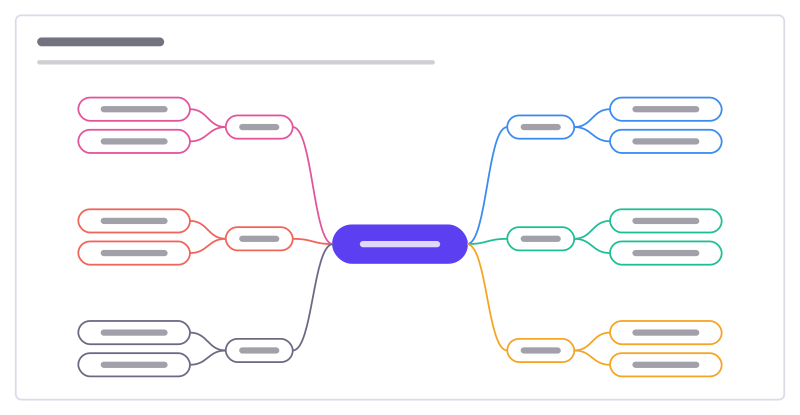
Starbursting
Question an idea from six sides: who, what, where, when, why and how, as a mind map.
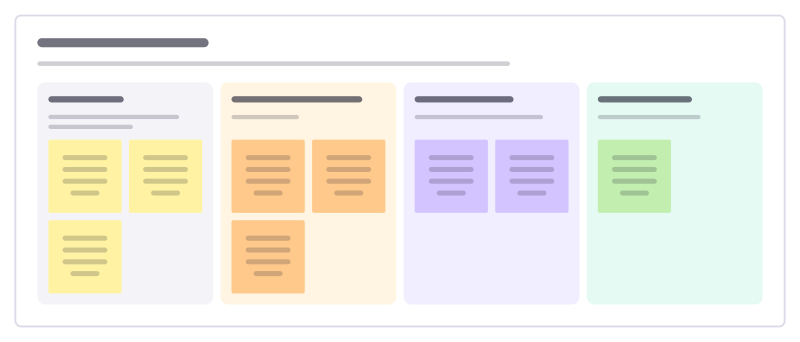
Assumption busting
List what everyone takes for granted about a problem, flip each assumption, and see which flips open up new ideas.
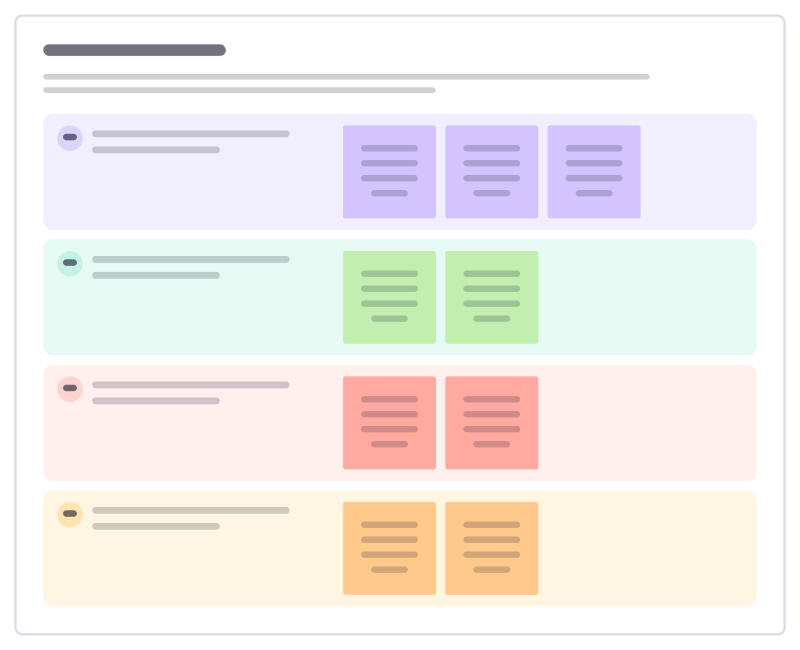
Borrowed ideas
Ask how other industries would solve your problem, then steal their best moves on purpose.
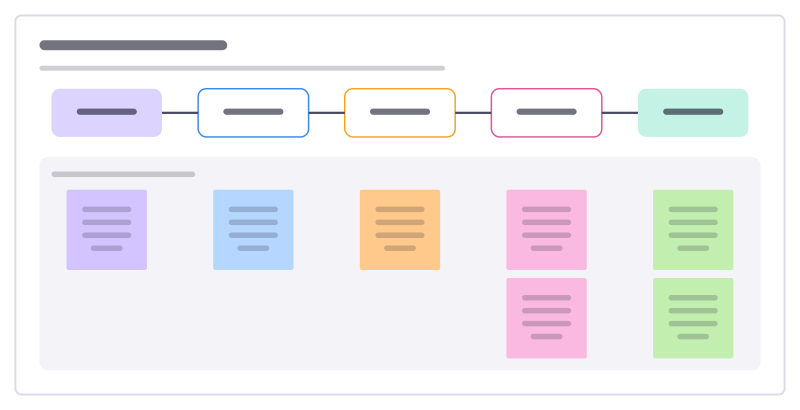
Idea to experiment
Turn one promising idea into a small, honest test: the belief behind it, the test, the signal to watch and the decision it informs.
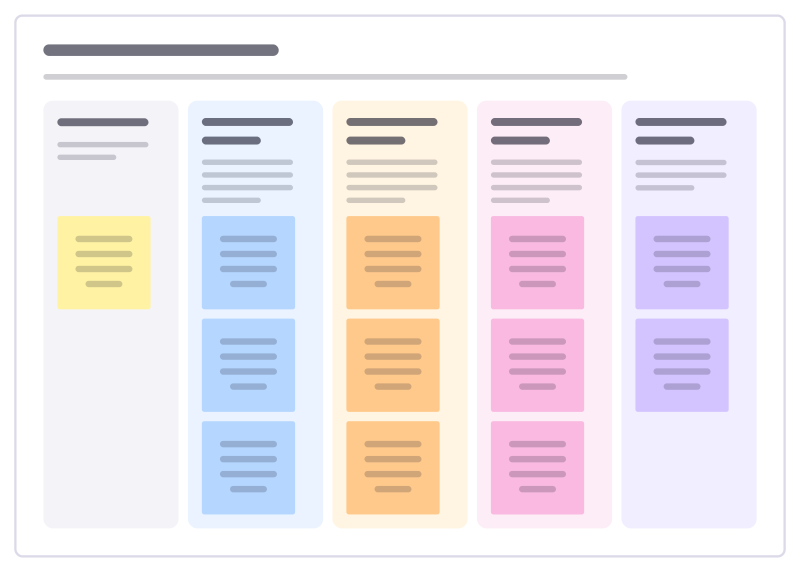
Random word stimulus
Break out of the obvious answers by forcing a link between your problem and a word picked at random.
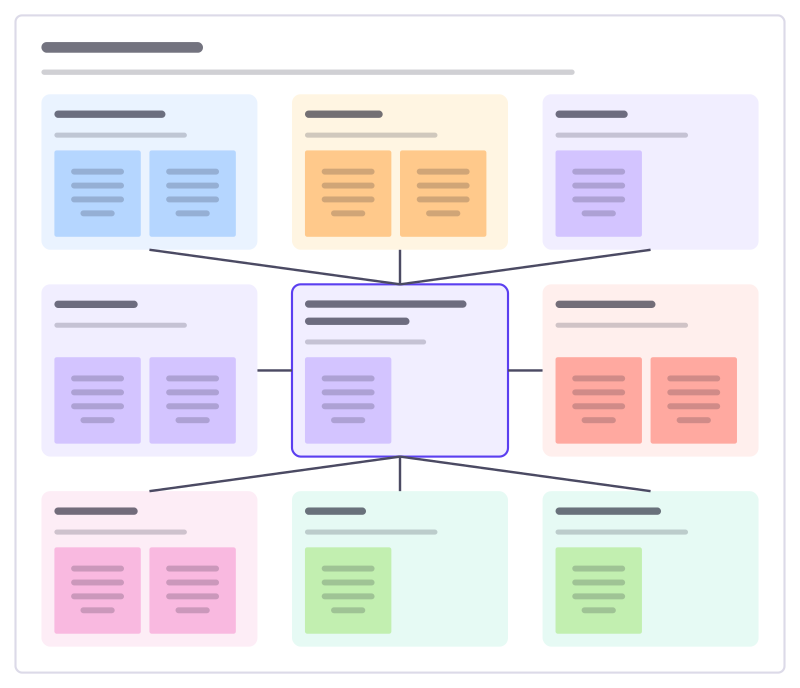
Lotus blossom
Grow one central theme into eight directions, then grow each direction into its own ideas, so you go both wide and deep.
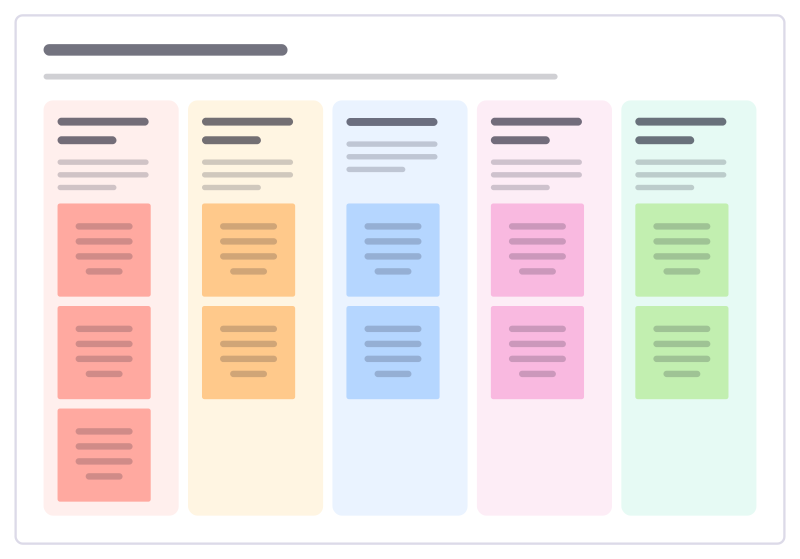
Constraint brainstorm
Generate ideas under a deliberately harsh limit (no budget, one week, no screens) to shake loose solutions nobody had tried.
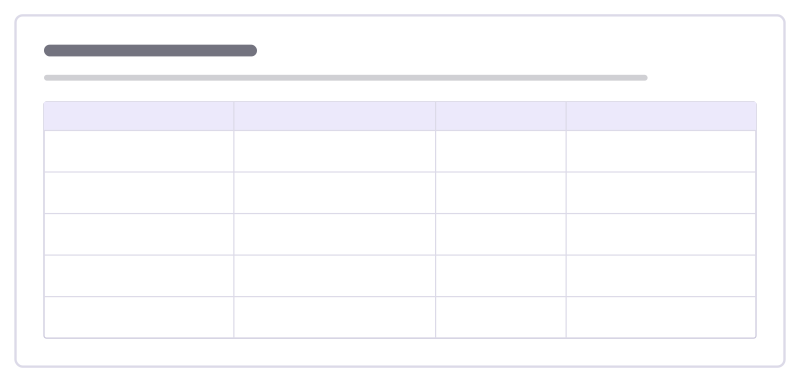
What-if questions
Ask bold “what if” questions about how things could be different, then sketch what each would mean and the first step to test it.
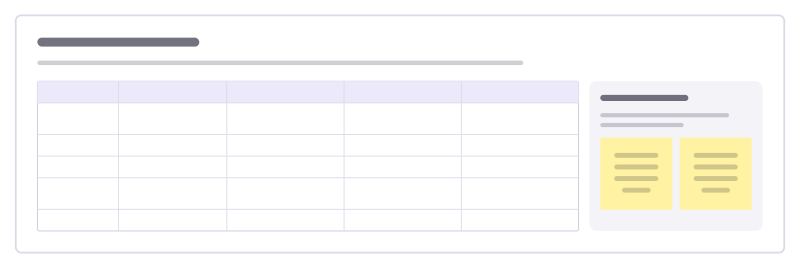
Attribute listing
Break a product into its attributes (size, material, price, how it is used) and change one attribute at a time to find new versions.
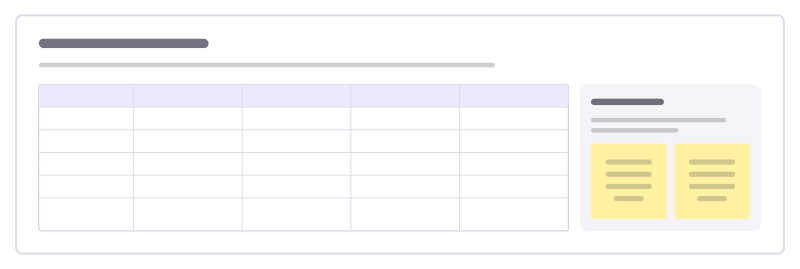
Morphological box
Split a design problem into its parameters, list the options for each, then combine one option per row into whole concepts.
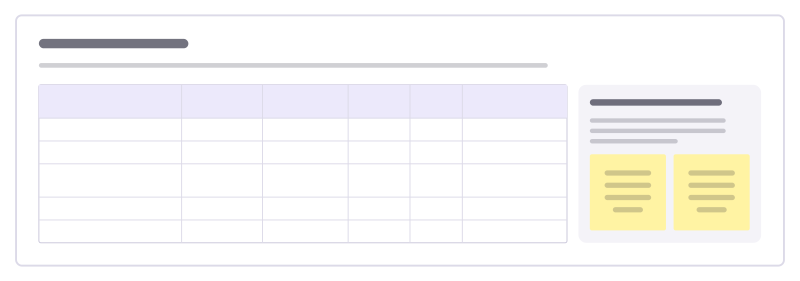
Idea scorecard
Score a long list of ideas on the same few criteria so the shortlist comes from the group’s judgement, not the loudest voice.
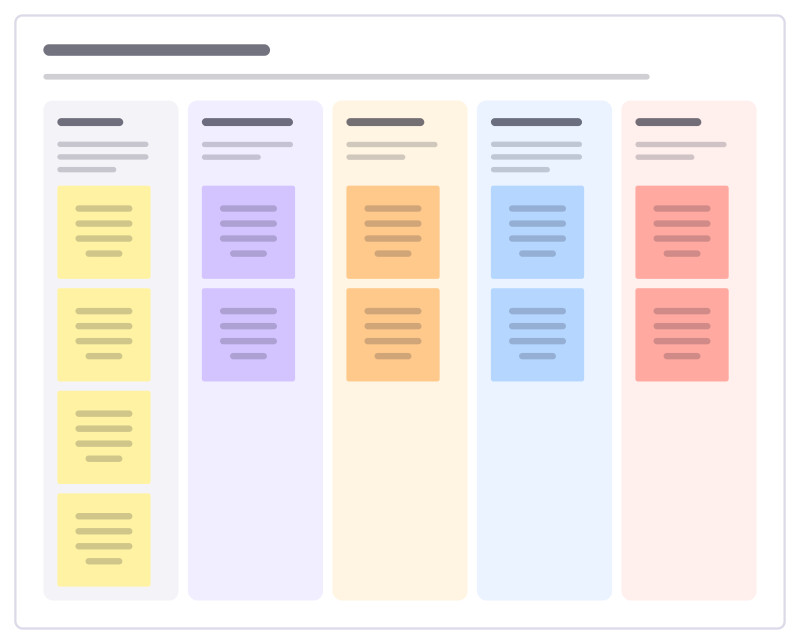
Brain dump and sort
Empty everything on your mind about a topic onto notes, then sort the pile into what to act on, decide, delegate or drop.
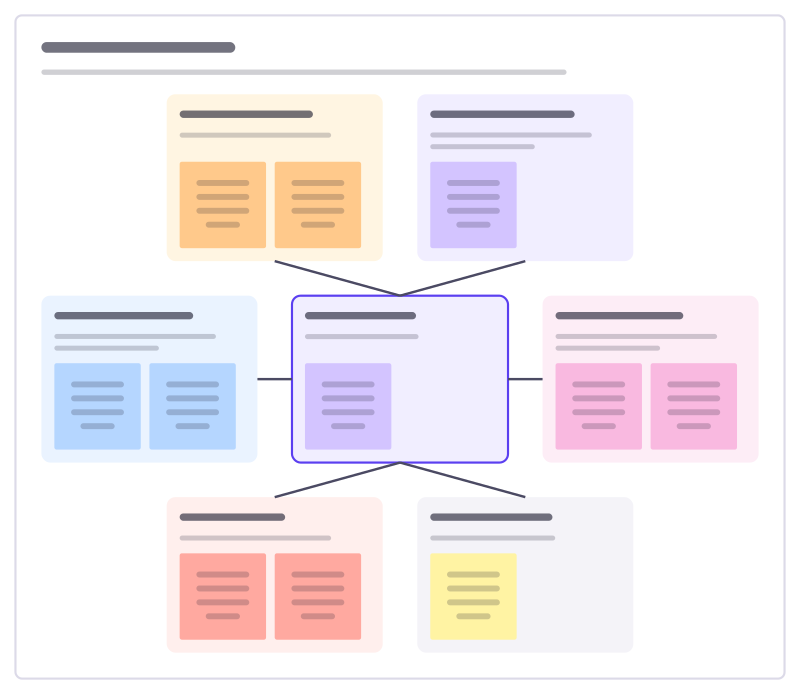
Perspective shift
Look at one challenge through the eyes of very different people, from a first-time customer to a competitor, to find ideas you would miss.
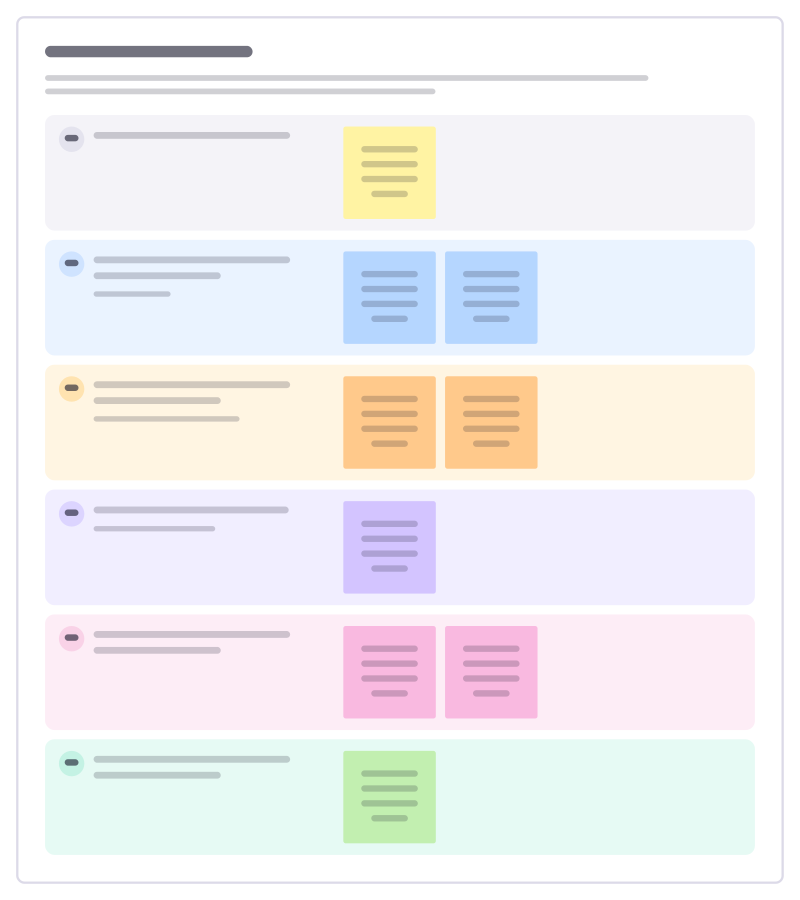
Problem reframing
Before solving, restate the problem in several ways, broader, narrower, flipped, from another angle, and pick the frame worth working on.
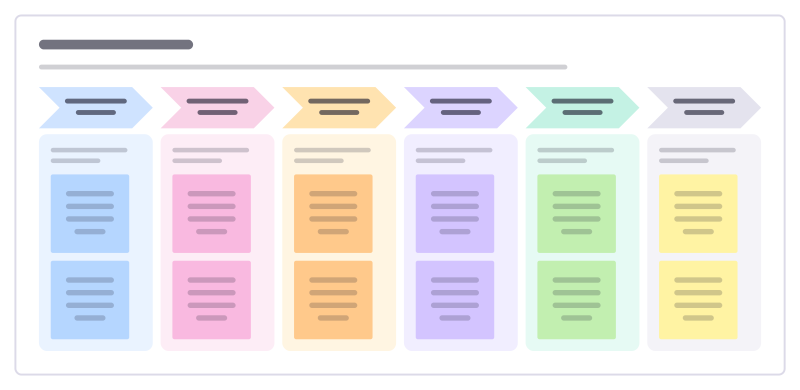
Hackathon plan
Plan an internal hackathon from theme to demos: dates, teams, rules, judging and what happens to the winning projects afterwards.
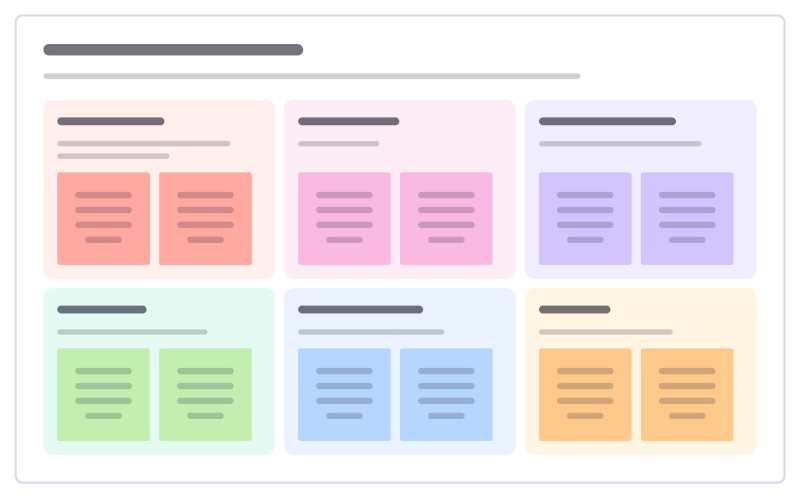
Hackathon project pitch
One page for a hackathon team: the problem, who has it, what you will build in the time, the demo you will show and who you need.
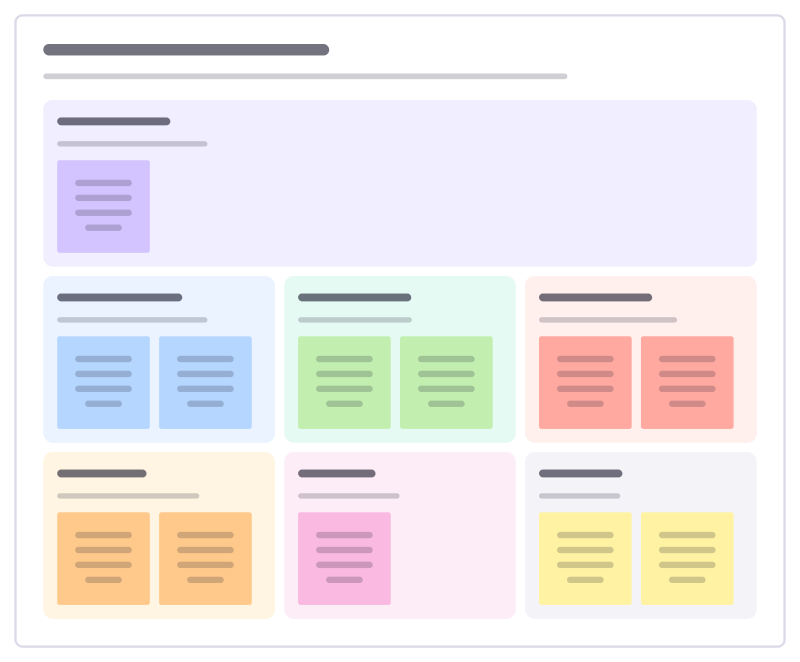
Innovation challenge brief
Frame an open challenge for staff or the public: the question, why it matters, what a good entry looks like, rules and rewards.
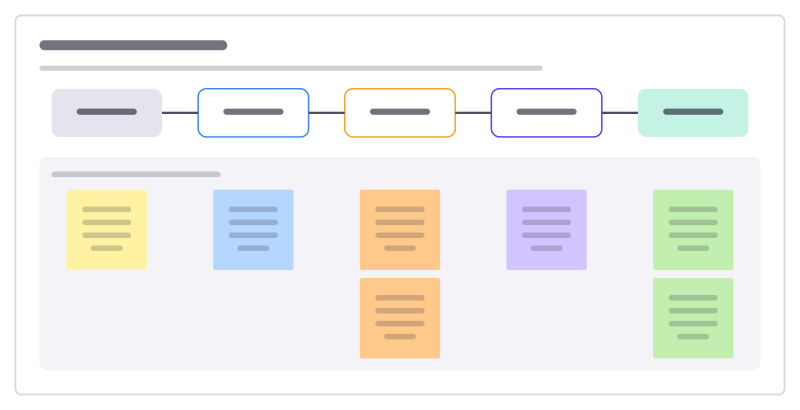
Analogy brainstorm
Find who else, in another field or in nature, has already solved a problem like yours, and borrow the principle behind it.
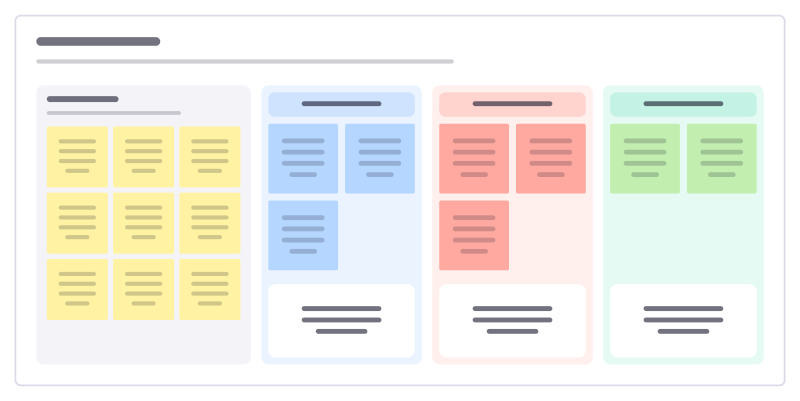
Affinity map
Turn a pile of research notes into themes, with one insight written under each.
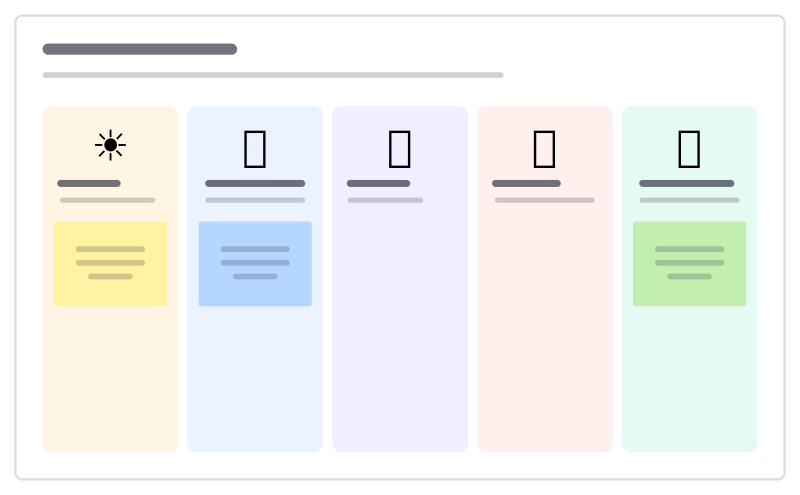
Weather check-in
A light warm-up: everyone places a sticky under the weather that matches their week.
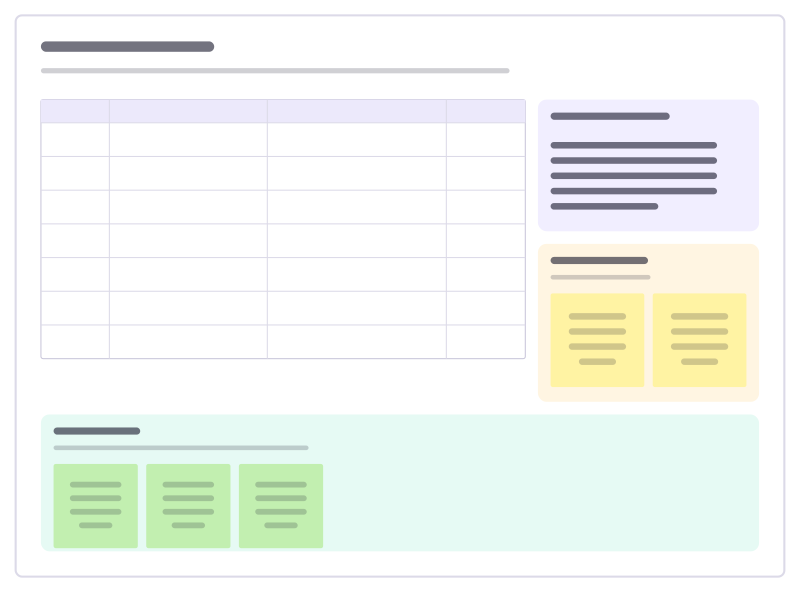
Workshop agenda
A timed agenda with methods and owners, the goals, a parking lot and a check-out.
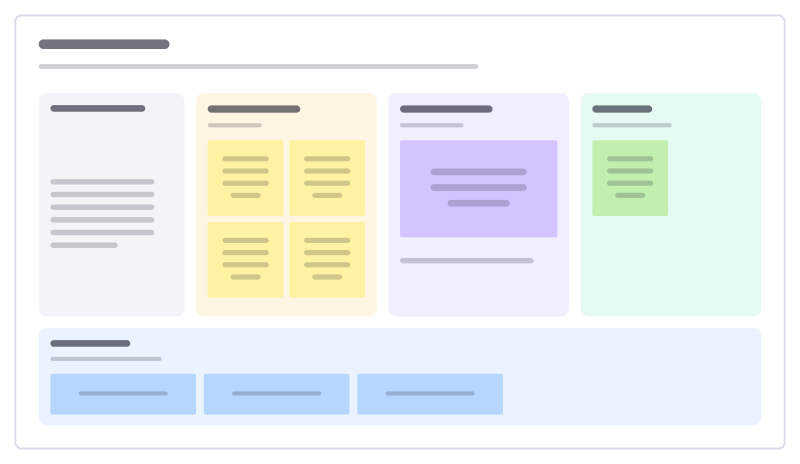
Lean coffee
An agenda-less meeting: propose topics, vote, and talk through them in timeboxes.
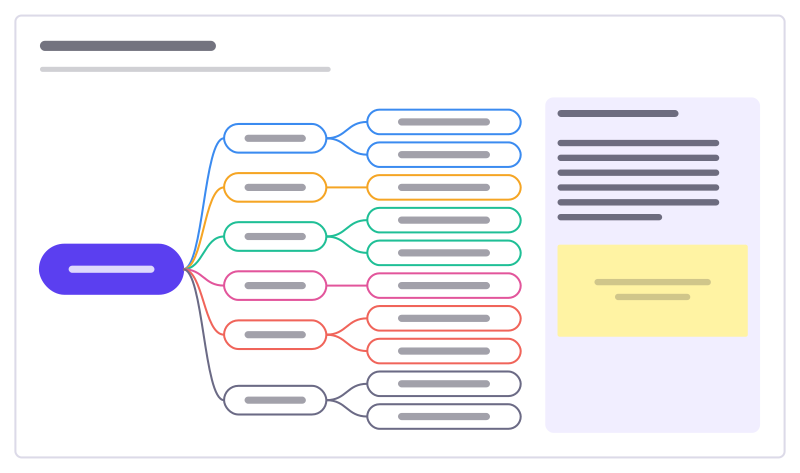
Class brainstorm
A topic web for the whole class: a big question, themes as branches, ideas as leaves.
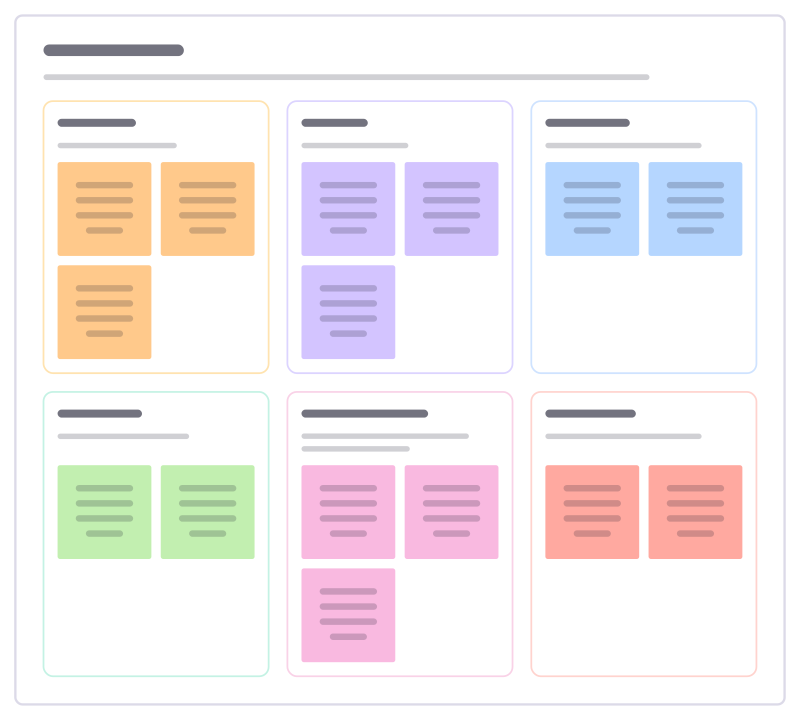
Moodboard
Collect the look and feel of a project in words: colours, type, imagery, textures and the feelings it should and shouldn’t give.
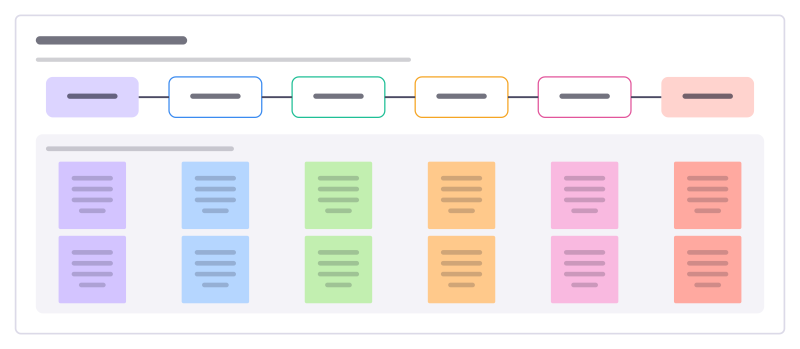
Story arc planner
Plan a story from opening to resolution, with what happens and how the main character feels at each stage.
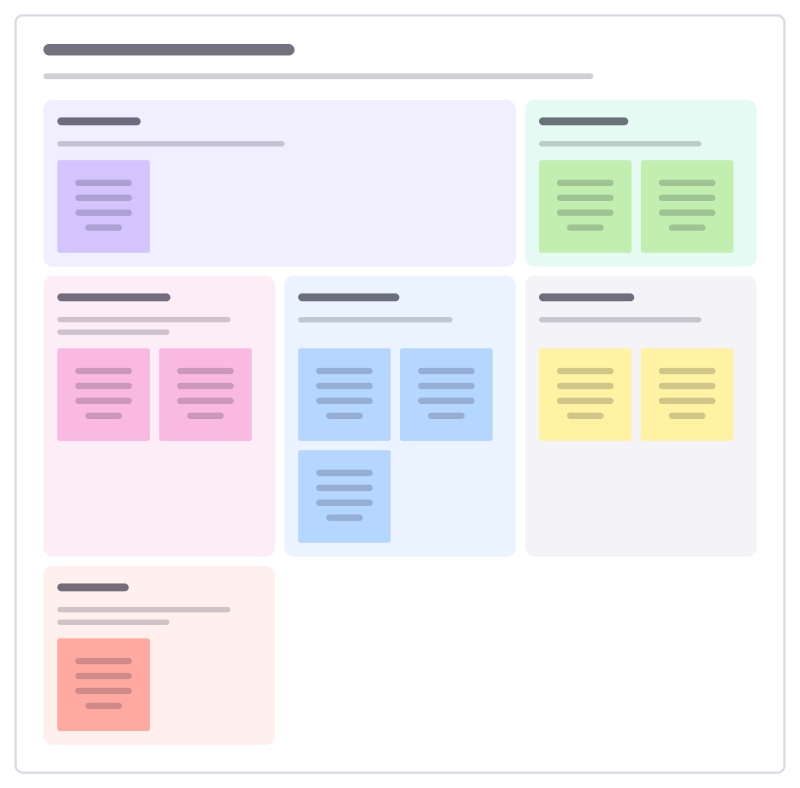
Workshop design canvas
Design a workshop before you book the room: purpose, people, outcomes, activities, materials and what could go wrong.

Table rotation conversations
Large-group conversations in rounds: small tables discuss one question each, people move between rounds, and a host carries the thread.
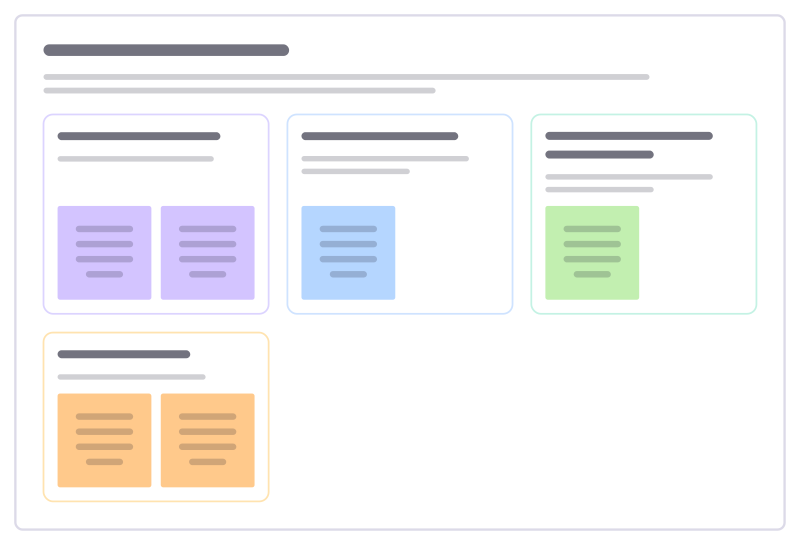
Inspiration share-out
Everyone brings examples from other products or places that solve a similar problem well, and the group captures what to borrow.
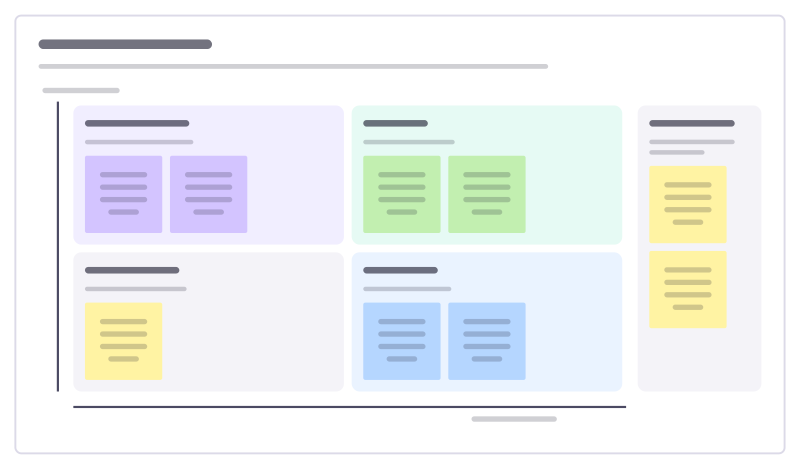
Cost saving ideas
Collect ideas to cut costs from everyone who spends money, then sort them by how much they save against how hard they are.
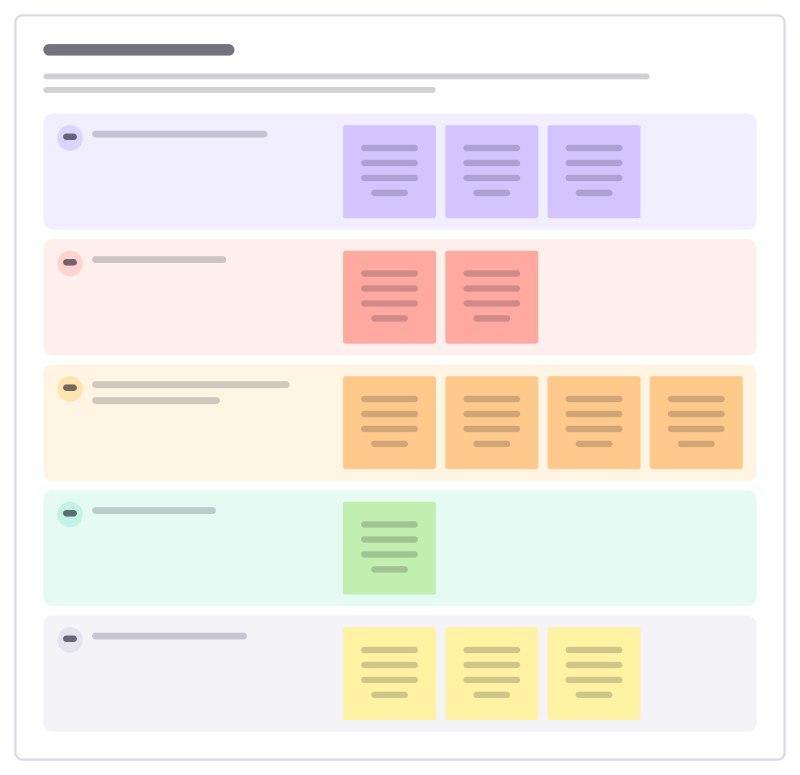
Naming workshop
Find a name for a product or feature: what it must say, lots of candidates, a shortlist and the checks before you commit.
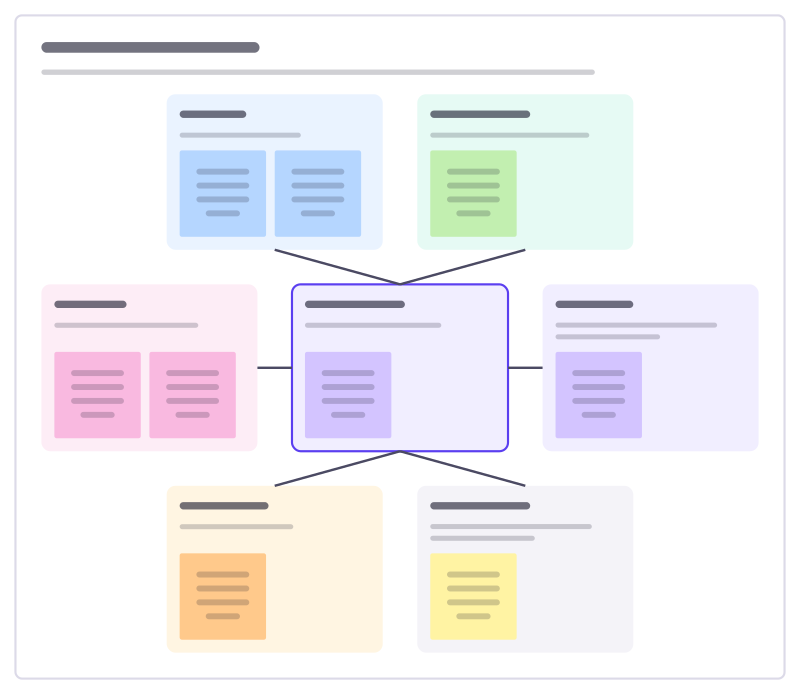
Cause and effect map
Put one problem in the middle and look for causes in six directions, so the team explores widely before settling on a fix.
Compare and contrast
Compare two things side by side: what belongs only to the first, what they share, what belongs only to the second, and a conclusion.
Bring your team and your agents to one board
Free to use, open source, and yours to host. No credit card, no seat count.